
Having crafted the perfect CV (see my previous blog) or filled in the application form, the next stage in completing an application is the cover letter.
Do not be fooled thinking this is just a short introduction for the CV.
The cover letter is extremely important when demonstrating your interest and suitability for the school. Make sure each letter is tailored to the school and role in question and check it several times for any errors (especially in terms of a correctly named school!)
I have a section of my guide where I cover these letters in depth, including examples, however in this blog I will outline some do’s and dont’s.
Do
- Review the school mission/advert and job spec and weave this into the cover letter (prove why they should hire you!)
- Understand what the school are currently trying to improve and tell them how you will support this (a good place to look for deficits is the most recent accreditation review)
- Be succinct – maximum 2 pages!
- Give concrete examples of your work
- Relate your prior experiences (EAL/private schools) to the current school, emphasising how you succeeded raising attainment
Don’t
- Simply copy over the whole of an old cover letter to the next school. You are likely to have errors in terms of the name (agh!) or it will not be as closely matched to the school. However, as I detail below, you can take sections and adapt them
- List everything from your CV – this is your chance to pull out what the school want in a candidate and provide evidence that you have it
- Use long, rambling paragraphs.
- Send it out without spell/grammar check and at least one other pair of eyes checking over the letter
- Combine a letter as a couple. Make two separate letters showing that you are two strong teachers in your own right
Make sure that you keep a record of each cover letter to review should you get to the interview – it’s likely some questions may be based around this. I have this letter printed and available when interviewed.
A spreadsheet or similar is ideal to keep a record of all your applications. It is interesting to note which were more successful in achieving an interview. In the past, I have looked over these cover letters and used elements of the letter in future applications.
Remember, “…if you are a first-time international teacher, it is highly likely that you will need to apply to many schools before getting an interview. If you are rejected by schools, politely request feedback. Use this feedback to adapt subsequent applications.” (Gosling, 2021, p.60).
Next week – Interviews!
Ways to connect with me:
Via LinkedIn http://www.linkedin.com/in/jess-gosling
Via X @jessgosling2
Via Instagram @internationalteachertravel
Via Facebook https://www.facebook.com/groups/newtointernationalschoolteachers/
Website: http://www.jessgoslingearlyyearsteacher.com
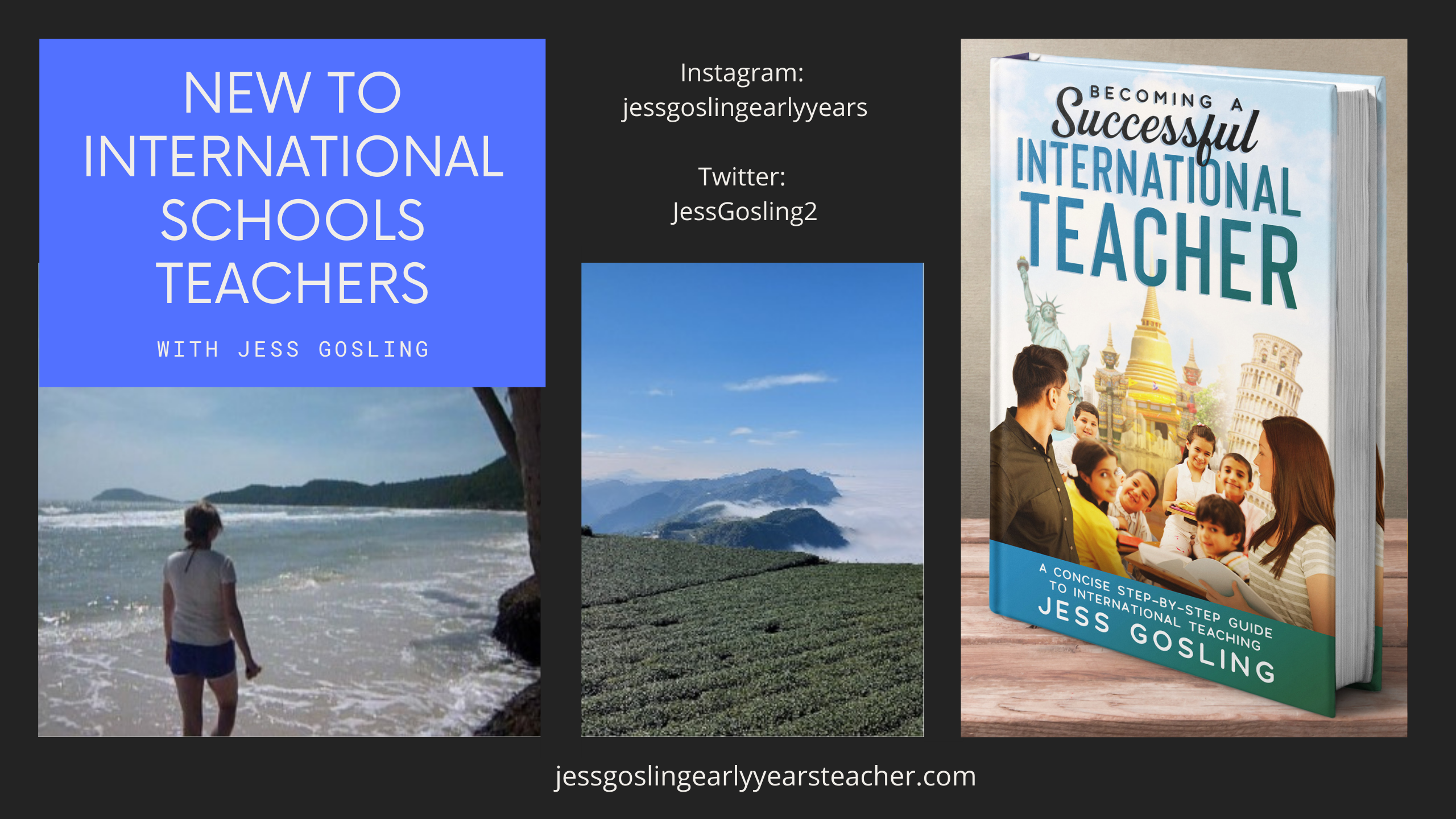
Purchase my book,
Gosling (2021), Becoming a Successful International Teacher. DLA Press, Taipei.
 New to International Teaching with Jess Gosling