Dream location: International Schools in Europe and Asia

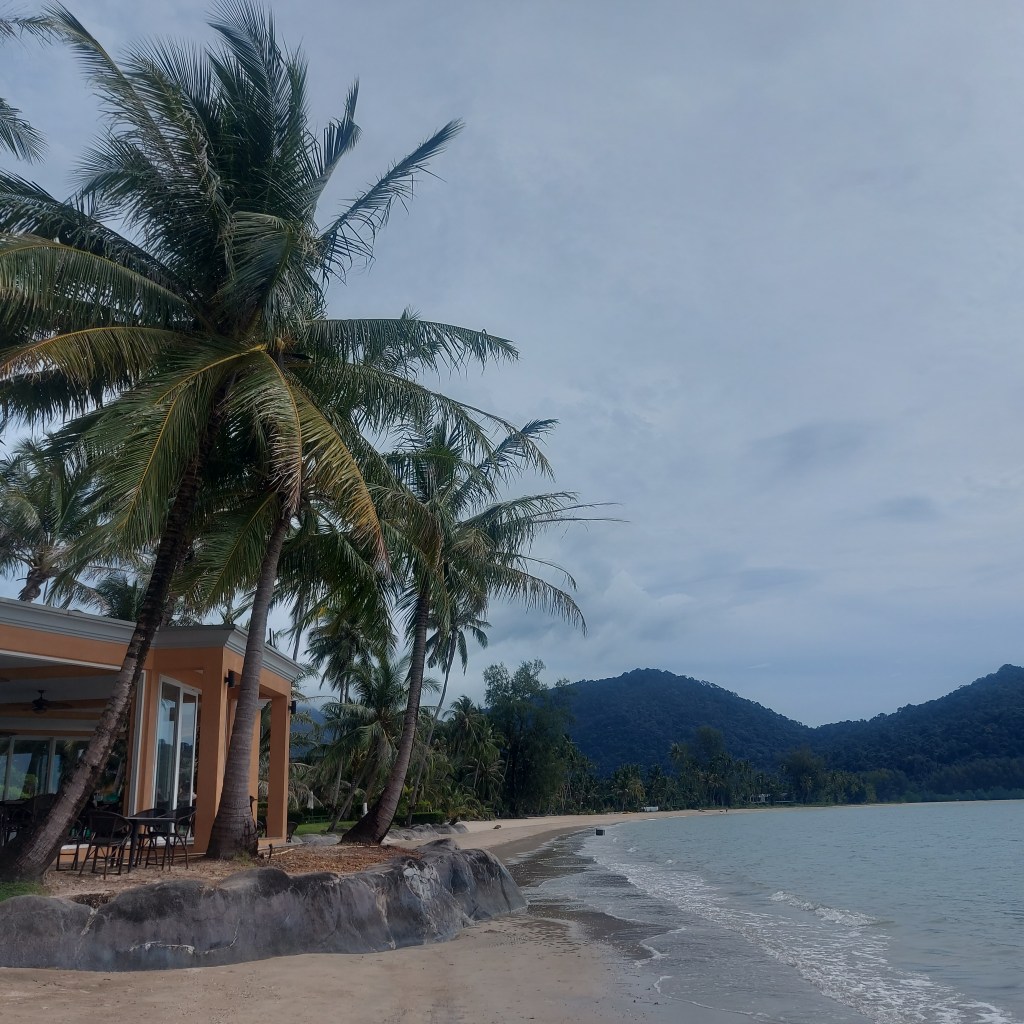
Since my recent image of where I live on the East Coast of Thailand showed a lot of traction on my group, New to International School Teachers, I thought I’d refocus on choosing where in the world to apply for roles, focusing on my experiences, as this is where I am knowledgeable. For an in-depth consideration of all the factors contributing to understanding where in the world to work, look at my guide.

Remember, my pros and cons are quite generalised and specific to my experiences, others may feel differently.

Europe

Pros- Close to home (UK), well-established systems in place (governments), opportunities to explore other countries.

Cons- (Generally) poor salary and little benefits, weather in comparison to Asia/UAE (if heat is your thing), not quite the adventure of countries further afield, possibility of low English depending on the country, often lower salaries than elsewhere with little or no benefits (including paying for child tuition)

It’s no revelation that central Europe did not suit me. But this isn’t the case for every international teacher.

For a first-time UK international teacher, there are many advantages. International schools often attract a younger crowd in my experience, which can be great if you are in that demographic. Salary and benefits are often less than the UK, but in some countries (such as Eastern Europe and Spain) the cost of groceries and eating out can be much lower. Spain and Portugal offer experiences after school as the weather is an improvement to the UK and the lifestyle is known to come alive in the evenings.

Living in Poland, I can say this was my closest experience to living in the UK, with only the language being a barrier. Everything else (shopping, transport, museums, activities) functioned much like the UK or better! So culture-shock can be less of a worry. A quick 2-4 hour flight and you can be back in Blighty. For teachers relocating from Australia or the US, Europe can almost be exotic (on the opposite side of the world), and undeniably beautiful with old towns and castles highly accessible. Both Australia and the US are huge continents so travelling short distances can allow for many sights or even hopping countries!

One thing to note: as the UK is not part of the EU, British citizens need to apply for visas just as any other non-EU nationality does. The school should either complete this process for you or give you support. In my experience, my Visa took 5 months to be cleared in Poland, the longest period I have had to wait in all my international teaching placements.

Asia

Pros: Climate,climate,climate!, cuisine, locals, often large foreign worker communities, abundance of schools to choose from with different curricula (often many in one city), holiday opportunities, in tourist areas English is usually widely spoken, (mostly) good salary and benefits (including child tuition).

Cons: Distance from home, weather (monsoons/earthquakes), unfamiliarity.

Having experienced living in both South-East Asia and East Asia, it is good to emphasise that the two areas are quite different to one another. I found Japan (2004-2006) and Taiwan (2018-2022) highly organised and structured. In both countries, English was not spoken widely, including in holiday destinations (although I admit my experience of Japan is very dated!) However, these were quite ‘easy’ places to begin as an international teacher, with plenty of things to see and do. Foreign food/restaurants could be found but were pricey. In Taipei, the community of foreign teachers was quite small. In both countries, I found it hard to break free of the teacher ‘bubble’, as activities for foreign workers were hard to come by. In Taiwan I connected with other local and foreign teachers through the launch of #WomenEd, however, my connections with Taiwanese were very limited.

In South-East Asia (2011-2018) (2024-ongoing) I have found the community easier to connect with. My daughter spent the first half of her life in Vietnam and we have built very special memories there, and connections that still exist. In both Vietnam and Thailand, I have experienced the connection with local people to be easier to make. This has not centred around my then-daughter’s nursery or now school, but in community-inclusive events. Some of these events I organised myself, but others I found through Facebook and word of mouth.

In South-East Asia I found the cuisine fantastic, the holidays/weekends away a huge bonus, and as I shared yesterday, my general surrounds to be more than I could have hoped for. This is likely as it fits me, as the country you chose to relocate to must fit you. As Mo Gawdat and others have said, happiness depends on your expectations in relation to the reality. My reality constantly supersedes my expectations here.

Where to work

When you consider where to work, if you are not single you have others’ expectations to factor in. I know that my happiness is not enough. As far as I am concerned, the triangle of my family unit must be in sync with one another. This is why the move back to South-East Asia was a family discussion, as was the school we chose to apply to. The pedagogy of the school fits exactly with my husband’s interests, so he is stimulated and excited about work. The school is a good fit for my daughter, offering her a close-knit community where she is excelling.

We often discuss if one of us is not happy, it’s time to reconsider our school/location. I know first-hand how difficult it can be for a child if a parent(s) is not content in their work. Therefore this balance must be met for all.

Do share your insights on this post of ‘best places’ to work for you/you and a partner or family unit. I’d love to hear!

Ways to connect with me:

Via LinkedIn http://www.linkedin.com/in/jess-gosling

Via X @jessgosling2

Via Instagram @internationalteachertravel

Via Facebook https://www.facebook.com/groups/newtointernationalschoolteachers/

Website: http://www.jessgoslingearlyyearsteacher.com

Purchase my book here.

Researching and Securing a Role in International Education: Networks

I am inspired to write about the importance of networks again, following on from my first webinar as co-host with #WomenEd Thailand. The nature of networks not only creates spaces for discussion and problem-solving, but also provides insight into teacher’s experiences of different roles and schools.

Gaining many different opinions on/about a school and a region in which you will move will help you feel more confident on your choice and certainly better informed. You can not only rely on a principal’s experience of a school, which they will likely share in the interview, should you ask. They will likely have a very different experience and view to those working in the classroom or other levels of leadership.

A thread connects my two blogs, ‘Different Types of International Schools‘ and ‘Where to look for international teaching jobs‘, that is, using networks for research. Of course, when researching a school, personal recommendations from colleagues and contacts will most likely your first port of call. But what if you don’t have a PLN yet, or, none of your contacts know about a particular school/country?

When I applied for a school in Taiwan, quite early in my career, I did not have any international professional networks. At that point, as I was taking maternity leave, I did not have many teacher friends I could ask. I certainly had a ‘feel’ for the school by taking a trip there (see previous blog), but aside from this, I joined the school on a ‘gut’ feeling without contacting many staff.

Following the move to Taiwan I began to build my professional networks (PLN). This has proved time and time again an excellent source to understand how schools operate outside of their websites/marketing campaigns and in addition to receive support and advice on educational issues.

This is where developing your own PLN comes into place. Here are a small selection of platforms to get you started, that can offer insight into your country or school of choice.

#WomenEd

Due to having a vast reach worldwide, I used this network to research:

-recommended schools and principals/head of sections who advocated for women in leadership

-contacts with individuals who gave me an honest report on how it was working at their school

-Cpd available on their youtube channel which helped develop my CV and interview skills

FOBISIA and worldwide CPD events

Perhaps not the most obvious way to discover more about a school/region, but attending events where many schools participate gives you the chance to ask educators candid questions about their schools. For example, I attended one event where we discussed early years provision, and I was surprised to hear about a lack of outdoor provision in EY from a world-renowned ‘tier 1’ school. It certainly put me off applying that year.

LinkedIn

Simply type in the school you are looking for and usually, a fair number of staff will be shown. To be able to message you may need to activate Premium, but usually LinkedIn provide free offers for this (so take up the offer when you need it!)

-Search and follow Principals/Heads of School to see their background in education and work in the educational community

-Connect/message teachers who work/have worked in a school that is of interest, and as them about their experience.

-Follow the schools LinkedIn page to keep up to date with their activities

Reddit – r/InternationalTeachers

-anonymous posting about schools

-often a discussion on the ‘type’ of school an establishment is – tier 1/bilingual

-possibility of connecting with teachers from the school or know of the school and private messaging them

Facebook New to International School Teachers International School Teachers. International School Teachers

– Join these groups and ask as a post about the location or even the specific school

– Join groups specific to the country and ask there also, even within non-teaching groups such as ‘Parents in…’ ‘Americans in…’

-Check in the ‘files’ sections of these groups as information may be there also

‘X’

International teachers do post here and you can follow threads #internationalteacher #internationalteaching and specific schools.

International Schools Review

You can pay for the subscription to look up schools and see teacher’s opinions of working there. However, there is also a free forum to ask your questions.

Remember – this is a small selection. It is worth searching for specific groups on both Facebook and LinkedIn that match the role that you are applying for, such as an international school leader or head of department.

There are a multitude of other networks, such as Diverse Educators and StepUp Network who will help you expand your professional expertise as you work overseas.

Start your PLN now by connecting with me!

Ways to connect with me:

Via LinkedIn http://www.linkedin.com/in/jess-gosling

Via X @jessgosling2

Via Instagram @internationalteachertravel

Via Facebook https://www.facebook.com/groups/newtointernationalschoolteachers/

Website: http://www.jessgoslingearlyyearsteacher.com

Purchase my book here.

Different ‘types’ of international school

Image: Austrian National Library

So you have noticed several schools online that you would be interested to apply.

But what can you expect from an international school? Hopefully the reality would not match the above image, but I’ve added it to illustrate how the reality may be very different from what you expect.

I discuss in-depth the ‘types’ of international school you may come across in my book, however, I will look at a few considerations here in brief.

First of all –

Be aware that there is no clear definition of what constitutes an international school. An international school does not need to meet any criteria to be labelled international. Although there are some similarities, overall international schools differ greatly to state systems. (p.37)

One definition could include the ‘international-ness’ of students within the school. A great number of international schools cater to the local (albeit-rich) population. Some require that the child or one parent holds an international passport. However, this does not mean that the child will speak English. It can mean that the passport has been procured entirely for the child to attend the international school. One school I worked at on international day a large number of children where identified as ‘Burkina Faso’, take what you will from that. However, other schools cater to a diverse range of children, with one nationality dominating. This could be English for British schools, or American for US schools.

When considering these different types of schools, whether predominantly expat or local population schools, you may wish to consider whether your desire to teach internationally comes from a desire to teach a diverse range of students or perhaps your interests lie in supporting the local population become global citizens. If you have children who will attend the school this will be an important consideration. (p.38)

So when deciding upon a school it is advisable to find out what demographic it is catering to.

In my experiences I found while I worked in Egypt and Taiwan with mainly a local population (in both cases within Early Years), the experience was one in which I could work on teaching both language and curriculum, plus I had little to no behaviour issues. As an early years teacher, I missed out on student discussions within play, which is vital to observations and next steps. In a contrasting experience in Europe, I found the diverse mix of children interesting to work with. They communicated in the common language of English which was helpful to my work. However, I felt there were more behaviour issues and often, from the parent’s perspective, a different standpoint on what was important in terms of education than I had felt in Asia.

When I became a mother with a school-attending child, it became increasingly important to me to work in a more diverse school where children would be using English both in class and at playtime. In one school I had heard that students had segregated themselves at high school into groups of natives and non-natives, and this was highly concerning for me.

In my book, I expand on this area and discuss the advantages and disadvantages of working for for-profit and non-for-profit schools, and the different levels of ‘tier’ within international schools, which is also useful to consider.

Thanks for reading!

Ways to connect with me:

Via LinkedIn http://www.linkedin.com/in/jess-gosling

Via X @jessgosling2

Via Instagram @internationalteachertravel

Via Facebook https://www.facebook.com/groups/newtointernationalschoolteachers/

Website: http://www.jessgoslingearlyyearsteacher.com

Purchase my book here.

Applying for an overseas teaching position directly: one success story

A second blog this week follows on from my very popular blog, Where to look for international teaching jobs. I thought I’d share my experience of going directly to a school when I had already applied for a role there.

Taiwan had caught my attention for a while when I lived in Vietnam, as friends often returned from trips there exclaiming, ‘it is so green there!’, ‘everything is so calm!’, and even more importantly to me at that time, as I had a toddler, ‘there are so many parks and playgrounds!’. I was told stories of a level of safety I had never heard of before, such as a bag full of valuables (Ipad, phone, cash, passports) handed into a Police Station and retrieved by the travellers. Everyone who returned shared experiences of kindness from the Taiwanese.

Whilst I dearly loved Vietnam I recognised in 2017 that my time there was ending. I was deeply concerned about the rising pollution levels as my daughter frequently had coughs. Further, as she grew older I knew ‘Kids Cafes’ would not have the appeal to her that they once did. My husband had worked 7 years at his school and was ready for a change.

I had heard of friends of friends who had applied to the school, and never got beyond the application stage. I knew that visiting the school may set us apart from other applications if we were keen.

So, two jobs became available at our chosen school and we applied. In a separate email, we explained that we would visit Taipei in the Christmas holidays and we would very much like to visit the school. The school accepted, with the then Deputy Head promising to show us around.

When we travelled to Taiwan we knew it was a country we’d love to live. It seemed a ‘calmer’ side of Asia compared to South-East Asia, and with a three-year old we were looking for some peace! We loved the metro system and clean efficient transport to take us around. The food was wonderful and the culture seemed to fit us well. We just had a school visit left to convince us!

Walking to the school I remember feeling quite nervous. We were bringing our (then) strong-willed four-year old. We never gave her sweets but stopped for Haribo on the way, ensuring her she would have them at the end of the tour, if she listened to us and behaved. We took the tour and I was really impressed with the then-deputy head. The school felt a little too big for what I was used to, but I could see that it was well-run and organised. The tour ended with a visit to the Headmaster. We were sad to hear he was in his final year at the school, as he was warm and welcoming. He shared his snack with our daughter and I was impressed that he was most interested in me and what I had been doing (I had been on five years maternity leave at this point). We had a good feeling from this visit.

When we returned home we were offered interviews and I’m happy to say we did get that job. Leaving Vietnam was really difficult after 7 years, however, I was so pleased to be going somewhere I had already experienced and ‘knew’. I feel there were very few surprises for us.

If you have decided on a particular school as your ‘top’ school, and if a trip there is feasible, I would highly recommend you go. When I was working in the UK, this was very common and expected. It gives a context for your interview and an insider angle for the school. Even more so, there is the chance to reflect upon whether it would be a good placement for yourself and your family.

Ways to connect with me:

Via LinkedIn http://www.linkedin.com/in/jess-gosling

Via X @jessgosling2

Via Instagram @internationalteachertravel

Via Facebook https://www.facebook.com/groups/newtointernationalschoolteachers/

Website: http://www.jessgoslingearlyyearsteacher.com

Purchase my book here.

Where to look for international teaching jobs

Image: http://www.tes.com landing page for international job search

Read on for a brief guide to where to hunt for your teaching job abroad. Excerpts are taken from my book, Becoming a Successful International Teacher, where you can research the options at greater-depth. In this guide I share my methods of securing multiple overseas roles, but also used my survey information where I asked international teachers which methods were most successful for them and why.

“International schools are beginning to post their positions earlier and earlier [especially if you are interested in leadership positions], therefore it is recommended you begin your search around September for an August start [of the following year]. This is not true for all countries; Singapore, Australia, New Zealand, and South America, for example, have earlier start dates. So be aware of the academic start dates and adjust your search accordingly” (2021, pp.18-19).

Most teachers use one or several of these methods:

Internet job sites – examples TES, Guardian Education, these sites post roles from all over the world (with a focus on British schools overseas) and teachers can apply to these roles for no fee.

Applying to an educational group – examples include International Schools Partnership. These are umbrella companies that often own multiple schools in one or several areas of the world.

Applying to a programme – for teaching English rather than in international schools, such as the JET programme in Japan.

Recruitment agencies – a few examples (more specified in my book, as well as a discussion of the value of each) include Inta Education and Teacher Horizons. The two quoted are free for teachers and will support your application to schools which they work with. Paid for agencies such as Schrole, are also worth exploring (particularly for IB/American curriculum schools) and explored in-depth in my guide.

Recruitment databases – subscribing to a paid ‘jobs database’, more information in my guide.

Approaching schools directly – more information on how and when to do this can be found in my guide.

Social media: Facebook/LinkedIn/X – check my guide for an in-depth discussion of these areas.

Personal recommendations from teachers

Contact previous employers and colleagues

“Overall, international teachers believe that there is not a one-stop-shop anymore in finding a teaching position abroad. The best method is to conduct a job search is to use several methods: join agencies and also complete your own search. Ask around and check forums for advice and leads” (p.29).

Ways to connect with me:

Via LinkedIn http://www.linkedin.com/in/jess-gosling

Via X @jessgosling2

Via Instagram @internationalteachertravel

Via Facebook https://www.facebook.com/groups/newtointernationalschoolteachers/

Website: http://www.jessgoslingearlyyearsteacher.com

Purchase my book here.

Follow on: Living where you used to holiday

Following on from last week’s blog, whereby we looked at where in the world to work, in both my book and blog I shared that it is worthwhile being careful of living somewhere where you used to holiday.
Fast forward to this weekend in Ko Samet, Thailand. I experienced returning to a place I once holidayed. Thailand was my first ‘proper’ backpacking experience far from home when I was nineteen. I worked a 9-5 as a receptionist who redirected calls for 8 months, to save up for travel. The first tropical island I ever visited was Ko Samet.
Taking the trip on the weekend, 25 years later, excited me and slightly worried me. What if the quiet island had changed to be unrecognisable?
I was lucky as (unlike many other Thai islands) this was not the case. I chose a basic (yet air-conditioned due to my family’s insistence) bungalow close to the beach. Some may call this accommodation retro now, as it was very similar to the kind of accommodation I booked in 1999 (at a fraction of the cost!). The restaurant too was basic, with grilled fish out front. No swimming pool or spa, just a beautiful beach to stare at.
The drive up to the bungalows took us on a dirt road in a songthaew. This area, had changed very little.
It felt wonderful – being in Ko Samet with my daughter and husband, after once visiting a lifetime ago.
This weekend was about connecting with other teachers, and it was so nice to be part of a community together as the children played in the sand and splashed in the waves.
Could I have imagined in 1999 that I would be returning with a child and husband? Not at all.

Am I glad I did? Absolutely. A wonderful trip back down memory lane.
And in case you were curious, no I didn’t venture to the bars at the far end of the other beach with neon lights and loud music, I prefer now the quiet of a beer enjoyed on a lounger listening to the sea.

Do share your experiences of living where you once travelled.

Where in the World to Work?

Before beginning to search for roles abroad, you may already have an idea where you want to live. In my book I explain, “It is likely you will feel draw to certain countries due to previous knowledge or experience, whether that be from a holiday or a personal recommendation.” (2021, p.29).

In my experience, choosing a place to work overseas due to prior experience worked both for me and against me. When moving to Egypt, I had in my mind the experiences of a holiday there, in which a great deal of time was spent at the Red Sea Coast. Flash forward to living and working in Cairo, commuting for two hours each day to get to my school, my reality was very different. Yet, now that I have relocated to Thailand, a country which I began my international travels at 19 and have visited many times since, I continue to love and savour (almost) every experience here. The rationale for this I feel is that I have moved to an area which is itself like places I visited. Having spent time in Hua Hin prior to this move, I can see many similarities with the East Coast where I live.

Aside from my personal experience, there are many considerations you should explore when considering where in the world to work. In this blog I will list some of them, but for an in-depth discussion refer to my book (2021, pp.29-37).

The Physical Environment – do you crave the outdoors? beaches? do you need ‘western’ shopping?

AQI – if air quality concerns you check this out, it may be suprising!

Natural disasters and political unrest (governments)

Country/visa requirements

Culture of the country and the school

Internet/social media

Language

Healthcare

Transport

Moving abroad as a couple or family

Your own expectations

Make sure to research any areas of interest so you are not faced with too many surprises when you move! However, especially if this is your first international posting, be open to countries you may not have considered. After all, a school can also make or break an experience, even in a much sought-after country for travellers. I always prioritise a school and the country comes in at a close second.

Preparing for international teaching jobs: expanding your CV

In this blog, I will discuss preparations for teaching abroad which could help your application. All quotes are taken directly from Becoming a Successful International Teacher, which is currently priced highly competitively across all world markets of Amazon and through other online retailers.

When you apply for an international teaching role in a British School, it is unlikely that you will send a CV. However, you almost certainly will need to fill in an application form that will require similar information to a CV. When applying for a new role, I always update my CV and use this as a base to copy and past relevant information into my applications. This can save a lot of time and energy, as it is likely for your first international role you will need to make several applications.

To help your chances on securing an international teaching role, it is important that your application stands out as much as possible for being a teacher who is dedicated and knowledgeable as well as committed to developing the school.

In every international school I have worked there is the expectation that teachers will offer 1-2 extracurricular activities (ECAs). They usually take place after school, but some schools can offer these before school or at lunchtime. Therefore, when considering your application or interview, a key focus of international schools is determining what you can offer outside of teaching.

International schools are often highly competitive in terms of the sports and music programs they offer. If you play an instrument and/or can coach a sport this will be looked on favourably. In addition, if you have any hobbies, such as yoga, knitting, or gardening, these ‘soft’ skills are also good to highlight to support the ECA program. In my book, I provide the following advice:

“Prior to the job search, you should begin to build up your CV. Support your current school in projects which highlight how you are a good team-player within the school and wider community; furthermore, include initiatives which set you apart from other teachers. Investing in English as an Additional Language (EAL) courses and observing colleagues who teach non-native children would also support your application” (Gosling, 2021, p.18).

In one school I developed our mainstream EAL program through an action-research project. I have organised and led special events such as UN Day, Christmas Performance, and Children’s Day. Volunteering in your current school for an event organisation will be a great talking point in the interview and show that you are willing to support the school.

Showing that you are part of the education community could also support your journey. There are many groups available which provide not only community but also training. I can recommend the following as I have worked directly with them:

WomenEd (a global grassroots movement that connects aspiring and existing women leaders in education). They offer global and regional groups so you can connect in person.

Chartered College of Teaching (a professional body for teachers – dedicated to bridging the gap between practice and research and equipping teachers with the knowledge and confidence to make the best decisions for their pupils). 

Step Up Network (for new and aspiring leaders in education)

Diverse Educators (a collaborative community that celebrates the successes and amplifies the stories of diverse people)

If you have been part of inspections, include this in your application and you may discuss this at the interview. International schools, similar to UK schools, are always looking to improve. If you can detail how you supported your year group/department in the inspection (and the work prior/after) this will show the school your commitment to improvement.

In my book, I emphasise the importance too of Continuous Professional Development (CPD). In general, the schools I have interviewed have been impressed with my commitment to CPD as it shows a commitment to professional improvement. In an interview, you could be asked how you will best support children with EAL or learning difficulties. If you do not have multilingual children in your class, try to build up experience of observing teachers working with them. An excellent source of teacher CPD (online) is the National College and free Twinkl TeachMeets. However, if you do share that you are an avid follower of CPD, make sure to take notes at the most recent CPD so you can share insights at the interview.

I hope this has given you a few ideas of building up you experience towards transitioning to an international teacher.

In my next blog, I will unpick Choosing Where in the World to Work

Ways to connect with me:

Via LinkedIn http://www.linkedin.com/in/jess-gosling

Via X @jessgosling2

Via Instagram @internationalteachertravel

Via Facebook https://www.facebook.com/groups/newtointernationalschoolteachers/

Website: http://www.jessgoslingearlyyearsteacher.com

Purchase my book here.

The Journey Begins: Will I be comfortable working abroad?

This is a huge question and one that can be difficult to answer before taking the leap!

However, to support yourself on this decision, I ask in my guide (Gosling, 2021):

Do you enjoy travel and adventure?

-Are you open to new experiences?

-Can you cope with differing or limited resources or classroom space/facilities?

-Are you adaptable (or willing to adapt) to new curricula or variations of the National Curriculum?

-Do you make friends easily?

-Are you happy to work within a school with teachers from other countries, as well as parents and children who may be very different to what you are used to?

-Could you be away from family and friends for an extended period should you need to?

-Are you willing to ‘start again’ in a new home, new country and new school?

In addition to other questions…

Are you looking for adventure? You are not alone! Savva (2015) found in her research that teachers often reported stagnation or frustration in their professional/personal circumstances led them to teach abroad. If you enjoy travel and embrace the opportunities it offers, then international teaching could well be for you.

Struggling with mental health issues can be more difficult to address when living and working abroad, depending on where you chose to live. Therefore it is important that you can cope with challenges. A key consideration is how would you feel with living far away from home? If this is a worry for you, you should focus your search on international schools nearby to your home country. For example, coming from the UK, Europe, the UAE and North Africa (Egypt, Jordan and Morocco) are within 7 hours travel time.

Consider if you have changed schools previously in your home country, how did it make you feel? Did you adapt easily or did you feel far removed from your comfort zone.

For further considerations on this, plus when is the best time to move abroad and possible locations, check out my guide:

Beginning research on Becoming an International Teacher: Do you have the necessary qualifications?

I chose the image above for this blog, as well as my website, as I believe deeply that by even investigating the idea of searching for international teaching jobs, you have done something great. You have looked for a life whereby adventure is at the forefront when teaching overseas. Many people do not feel that changing their life will lead to greater fulfilment, and they are very comfortable where they are. We will talk at length about this in further blogs. However, if you are reading this right now I am good to presume that you are curious about teaching internationally, living in a different country, and exploring the abundant different global opportunities this presents.

In my latest blog series, I will be quoting directly from my book, Becoming a Successful International Teacher (2021) as well as adding my anecdotes and thoughts. Use these blogs as a starting point, but research deeply and widely. My book discusses in greater depth each area, but there are also teachers to follow on Instagram/Twitter, Facebook groups to connect to, magazines and other publications. In due course, I will share them.

So, to begin with, I wrote in my Preface that you must be qualified to work at the most established international schools. Initially, most teachers work at Entry-level international teaching jobs. What I mean by this is that you may not be employed in the same level of a ‘scale’ that you may currently be on, or with any leadership stipend. For your first role, it is likely you will need to look at schools in less desirable locations to get your ‘foot on the ladder’, so to speak. Some schools accept teachers without a recognised qualification, but these are not so abundant. By being a qualified teacher, in the private international school context, I mean to have an “…internationally-recognised qualification gained in or from the UK, or the equivalent qualification such as a US State Licence…These qualifications may be gained worldwide; however, they need to be accredited by a ‘western’ institution or university”(2021, p.9 and p.15). The roles I discuss are not Teaching English as a Foreign Language (TEFL) positions but effectively working in a school which matches your home country, at least in curriculum, where you are already qualified to work as a teacher.

If you are looking to teach in the UK, in state sector or private schools, teachers from some other countries with their respective country qualifications can apply for Qualified Teacher Status (QTS) which will enable you to work in the UK, then with this licence work overseas. So this could be considered a route into teaching internationally. Teachers can work up to 4 years in the UK without QTS. More details here: https://www.gov.uk/government/publications/apply-for-qualified-teacher-status-qts-if-you-teach-outside-the-uk/routes-to-qualified-teacher-status-qts-for-teachers-and-those-with-teaching-experience-outside-the-uk#applyservice

If you are already a teacher in your home country and have studied in the UK, you may be able to apply for Assessment Only QTS. Information from the site above explains:

To apply for assessment only QTS, you do not need a formal teacher training qualification.

However, you must have:

  • a minimum of 2 years’ teaching experience
  • a first (bachelor’s) degree from a UK or non-UK university
  • an English language qualification that is the same standard as a grade 4 GCSE (General Certificate of Secondary Education)
  • a maths qualification that is the same standard as a grade 4 GCSE
  • to teach children aged 3 to 11 in primary school, a physics, chemistry or biology (science) qualification that is the same standard as a grade 4 GCSE

If your qualifications come from a non-UK institution, your assessment only teacher training provider may want to see a statement of comparability from UK ENIC, the UK national agency for international qualifications and skills, showing how they compare to UK qualifications.

If you are already teaching abroad, without a qualification, you can apply to complete iQTS (international QTS) via the TES institute as well as universities. Note the difference between the PGCE (academic) and QTS (Qualified Teacher Status). Many international schools will not accept the PGCE or iPGCE with QTS. However, as QTS qualifies you to teach (as a licence) this can be accepted without a PGCE.

I hope this helps ascertain whether your qualifications will suffice for an international school. A second note to add here, and I particularly stress this with British international schools, experience teaching the curriculum is highly valued. Even more so if you have had a minimum of two years teaching in your home country. Schools will believe that you are abreast of developments/pedagogy and can share recent practice with them. Furthermore, schools may value that you have taught their curriculum in a country with inspections and very likely, demands to teach at a challenging level.

That’s all for now! Tomorrow I will post a valuable question that any qualified teacher looking to relocate must ask,

Will I be comfortable working abroad?